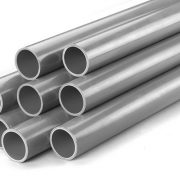

Brief introduction of widely used metal materials for 3D printing

3D metal printing, also commonly known as metal fusion, has conquered new markets in aeronautics, medical, construction and automotive sectors in last few years with its incomparable advantages and convenience. At present, 3D printing metal technology is fast and relatively cheap, can also be used to create large structures. The printing technology mainly includes selective laser sintering (SLS), electron beam fusion (EBM), selective laser fusion (SLM) and laser engineered net shaping (LENS). SLM use a high-energy laser source which can melt a variety of metal powder, is the most commonly used method. Metal powder used for 3D printers in domestic and foreign generally are: Tool steel, Martensitic steel, Stainless steel, Pure titanium and titanium alloy, Aluminum alloy, Nickel base alloy, Copper base alloy, Cobalt-chromium alloy and so on.


STAINLESS STEEL
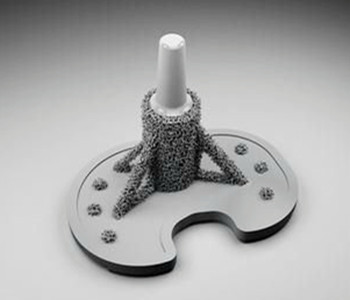
Stainless steel is the first material used in 3D metal printing due to its good chemical resistance, high-temperature resistance and good mechanical properties. At present, there are mainly three kinds of stainless steel applied in metal 3D printing: Austenite stainless steel 316L, Martensite stainless steel 15-5PH and Martensite stainless steel 17-4PH.

316L Austenitic stainless steel, with high strength and corrosion resistance, can be reduced to low temperature in a wide range of temperatures. It is applied in various engineering applications such as aerospace and petrochemical, as well as food processing and medical treatment.

15-5PH Martensitic stainless steel, also known as Martensitic aging (precipitated hardening) stainless steel, has high strength, good toughness and corrosion resistance, is a further hardening of the ferrite-free steel. At present, it is widely used in aerospace, petrochemical, chemical, food processing, paper and metal processing industries.

17-4 PH Martensitic stainless steel, which still has high strength and high toughness under 315 ℃, and strong resistance to corrosion and can bring excellent ductility as the laser machining state.


TITANIUM ALLOY
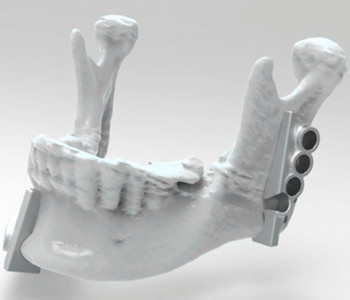
Titanium alloys have been widely used in aerospace, chemical industry, nuclear industry, sports equipment and medical devices due to their high temperature resistance, high corrosion resistance, high strength, low density and biocompatibility. Titanium alloy parts have been widely used in high-tech fields, such as F14, F15, F117, B2 and F22 military aircraft. The proportion of titanium used in a Boeing 747 aircraft is respectively 24%, 27%, 25%, 26% and 42%. However, the traditional forging and casting methods to produce large titanium alloy parts have many disadvantages, such as high cost, complex process, low material utilization rate and difficult follow-up processing, which hinder its wider application. Metal 3D printing technology can solve these problems fundamentally, so it has become a new technology for directly manufacturing titanium alloy parts in recent years.

TiAl6V4 (Gr5) is the first alloy used in SLM3D printing production. However, the poor plastic shear deformation resistance and wear resistance of titanium limit its use under high temperature, corrosion and wear resistance conditions. Therefore, Re and Ni are introduced into titanium alloys, and the 3D printed Re-based composite sprinkler has been successfully applied to the combustion chamber of aero-engine, and the operating temperature can reach 2200%.


COBALT

H13 hot work tool steel is one of them. Tool steels are widely used in industrial parts because of their excellent hardness, wear resistance, deformation resistance and the ability to maintain cutting edges at high temperatures. Martensitic steels, taking Martensite 300 as an example, also known as maraging steels, are noted for their high strength, toughness and dimensional stability during aging. Due to its high hardness and wear resistance, Martensite 300 is suitable for many die applications such as injection molds, light metal alloy casting, stamping and extrusion, and is also widely used in aerospace, high strength fuselage parts and racing car parts.


ALUMINUM ALLOY

Aluminum alloys have excellent physical, chemical and mechanical properties and have been widely used in many fields. However, the properties of aluminum alloys themselves (such as easy oxidation, high reflection and thermal conductivity) increase the difficulty of selective laser fusion manufacturing. There are some problems such as oxidation, residual stress, void defects and densification in SLM process when printing aluminum alloys. These problems can be improved by strictly protecting atmosphere, increasing laser power and reducing sweep speed. At present, SLM prints aluminum alloy materials mainly are the Al-Si-Mg series alloy such as AlSi12 and AlSi10Mg. Aluminum-silicon 12 is a lightweight additive manufacturing metal powder with good thermal performance. It can be applied to thin wall parts, such as heat exchangers or other auto parts. It can also be applied to the prototype and production parts of aerospace and aviation industry.The addition of silicon and magnesium gives the aluminum alloy more strength and hardness, making it suitable for thin wall and complex geometric parts, especially in the case of good thermal performance and low weight.


MAGNESIUM ALLOY

As the lightest structural alloy, magnesium alloy has the possibility of replacing steel and aluminum alloy in many application fields due to its special high strength and damping properties. For example, lightweight applications of magnesium alloys in automotive and aircraft components can reduce fuel use and exhaust emissions. Mg alloy has excellent in-situ degradation and biocompatibility, with low Young’s modulus and close to the human bone strength. It has more application prospect in surgical implantation than traditional alloy.


HIGH-TEMPERATURE ALLOY

High temperature alloy refers to the super steel alloy which with iron, nickel and cobalt as the base and can still long-term work in the high temperature of 600 ℃ or above and stress environment. It has high temperature strength, good resistance to corrosion resistance and oxidation resistance and good plasticity and toughness. At present, the alloys can be roughly divided into three categories: Fe based alloy, nickel based alloy and cobalt alloy.

Superalloy is mainly used in high-performance engines. In modern advanced aero engines, the use of superalloy material accounts for 40% ~ 60% of the total engine mass. The development of modern high performance aero engines requires more and more high temperature and performance of superalloy. The traditional metallurgical process of ingots is slow in cooling, some elements and second phase segregation are serious in ingots. 3D printing is a new method to solve the technical bottleneck in nickel alloy forming.

As a result, Inconel 625 is frequently used in metal parts used in marine applications and  oil and gas production. Inconel 718 is an age-hardened version of 625. 718 is a nickel-based alloy, which has good corrosion resistance and heat resistance, stretching, fatigue and creep properties, and is suitable for various high-end applications, such as aircraft turbine engines and land-based turbines. Inconel 718 alloy is the earliest used nickel base superalloy and is also the most used alloy of the aero engine at present.

Cobalt-chromium alloy has high strength, strong corrosion resistance, good biocompatibility and non-magnetic properties. It is mainly used in surgical implants, including alloy artificial joints, knee joints and hip joints, and can also be used in engine parts, fashion and jewelry industries.


Since the emergence of 3D printing technology in the 1990s, from the initial polymer materials to metal powder, many new technologies, new equipment and new materials have been developed and applied. There are a wide range of metal materials suitable for industrial 3D printing, but only several specified powder materials can meet the requirements of industrial production. Although the 3D printing technology of metal powder has achieved some achievements at present, the material is still the biggest factor and there are more higher requirements on 3D printing materials. Therefore, the development of 3D printing technology of metal powder still has a long way to go.
 

What’s 2205 steel?Duplex stainless steel S31803 or S32205?

Duplex stainless steel (UNS S31803, S32205, S32750, S32900) combines the advantages of Ferrite and Austenite steel. Its duplex structure is conducive to obtaining high strength and stress resistance. In addition, higher content of chromium, nitrogen and molybdenum increases corrosion performance and duplex steel also has good welding performance. Due to its excellent properties, duplex stainless steel is widely used in chemical industry, paper manufacturing, desalination equipment, firewalls, Bridges, pressure vessels, heat exchangers, turbine blades and transmission shafts of offshore systems.

Sometimes, UNS S31803 and UNS S32205 are referred to as duplex 2205. Generally, UNS2205 contains ASTM S31803 and S32205 duplex stainless steels. In other words, S31803 and S32205 are both called  2205 stainless steel, and S32205 is the upgraded series of S31803 by the adding of the lower limit content of Cr, Mo and N elements, which makes the little difference in mechanical properties. Their tiny differences in chemical elements and physical properties are showed below:

UNS2205 C max P S Si max Mn max N Mo Ni Cr
S31803


0.03


0.03 0.02 1.00


2.00 0.08-0.2 2.5-3.5 4.5-6.5 21.0-23.0
S32205


0.03

max

0.03 0.02 1.00

max

2.00 max 0.14-0.2 3.0-3.5 4.5-6.5 22.0-23.0


UNS2205 Tensile strength

min, Mpa

Yield strength

0.2% offset, min, Mpa

Elongation, A5%
S31803 620 450 25
S32205 655 450 25


According to the ASTM A182 Standard, Specification for forged or stainless steel pipe Flanges, Forged Fittings, and Valves and Parts for High-Temperature Service, UNS S31803 and UNS S32205 cannot be confused and they specified in different number, S31803 is marked by F51 and S32205 is F60.

When speaking of 2205 steel, it generally refers to S31803 or F51, while UNS S32205 or F60 conforms to ASTM 2205 adopts its higher corrosion resistance range, that is, UNS S32205 requires higher Chromium and Nitrogen content, thus guaranteeing better corrosion resistance. Generally, S32205 steel plate and S31803 are also called double standard steel plate, or 2205 steel plate for short. Our factory produce 2205 tubing and 2205 plates to make its chemical composition conform to two specifications of UNS 31803 and S30025. Our steel plate in stock can meet two kinds of standards at the same time.


6 applications for Titanium and Titanium alloys

The selection of titanium in the abundant application is because of its specific properties associated with the metal including reliability, corrosion resistance, thermal expansion, strength to weight ratio, mechanical properties. We offer an extensive range of Ti alloys in round bar, sheet & plate, coil, pipe & tube, pipe fittings, flanges, forgings and welding consumables for oil and gas, medical, chemical processing, power generation, automotive aircraft.


1. Aviation and Aerospace 

Titanium alloys effectively compete with aluminum, nickel alloys in both commercial and military airframes. Titanium is selected in aviation and aerospace due to its basic characteristics, specifically its strength to weight ratio since the 1960’s where it had its beginnings in military programs and ultimately moved into commercial aircraft. Structural airframe applications include wing structures, landing gear components, critical fasteners, springs, and hydraulic tubing.


2.Chemical Processing

Titanium’s superior corrosion resistance properties make it the industry choice for high-temperature environments like Chemical Processing applications. They are widely used in the piping material and components where need processing aggressive compounds like nitric acid, organic acids, chlorine dioxide, inhibited reducing acids, and hydrogen sulfide in the Pressure Vessels, Distillation Columns, Reactors & Agitators, Pollution Control Equipment, Heat Exchangers & Condensers, Swimming pool lining & fixtures, Instrumentation & Flow Control Equipment, agitators, coolers and so on.


3.Power Generation

Titanium material is widely used in the Power Generation industry. Titanium tubing is used on a large scale in the condenser and auxiliary heat exchanger applications in power plants due to its corrosion resistance and its unlimited lifespan. It has been proved that 6AL4V titanium turbine blades in critical areas to increase the efficiency and life of low-pressure turbines while at the same time reducing downtime and maintenance.


4. Medical Industry

The strength to weight ratio has made titanium a great material choice in the medical market where weight reduction is beneficial. Typical application including:

Bone and joint replacement: Artificial femoral head, Hip joint, Knee joint, Ankle joint, Shoulder joint;

Dental Implants: Dental implants, Dentures, Denture bases and stents;

Cardiac and vascular implants: Endovascular Stents, Cardiac valves, Pacemakers,

Skull repair implants: Two dimensional and 3D mesh plate, Bone screw, Bone, Plate;

Bone joint implants: Bone joint implant, Bone screw, Bone plate, Intervebral fusion cage, intramedullary pin, Spinal internal fixation system.


5.Marine Application

The selection of corrosion resistant materials used in the environment of marine is critical. The specific environment of each production within the industry should be taken into account to pick the proper corrosion resistant alloys for your needs. The Ti alloy is widely used in the piping materials and components of Down Hole Tooling, Process Equipment, Offshore Topside Piping, Subsea Forgings and Piping, Wellhead Equipment and so on.


6.Consumer Products

The strength to weight ratio has made titanium a great material choice in the sporting goods and fashion market where weight reduction is beneficial. Typical sporting products including tennis rackets, lacrosse sticks, golf clubs, bikes, camping gear, and more. In addition, some fashion brands have applied it to the design of the watch which the benefits include flexibility, light weight, comfort and fashionable. Another fashion accessories now being offered in titanium include eye glass frames, tableware, ashtrays, cups and so on.


Titanium provides an economically efficient material in many corrosive environments. The corrosion resistance extends the life cycle of equipment and reduces maintenance costs. We maintain a comprehensive inventory of specialty metals and titanium mill products in round bar, sheet & plate, coil, pipe & tube, pipe fittings, flanges, forgings, offering a wide variety of grades and sizes with lead times to satisfy your manufacturing needs. Contact us today for your need!


2018 China’s Titanium welded tube market outlook


Since the production of sponge Titanium by magnesium reduction method in the United States in 1948, we have stepped into the golden age of titanium industry. Titanium has been widely used due to its light specific gravity, high strength, low thermal conductivity, corrosion and high-temperature resistance, weldability, no magnetism, and excellent properties. Due to its high production cost, the titanium hadn’t earned the wide application in the industrial field. In recent years, with the development of science and technology and the progress of production technology, titanium can be processed into various forms and applied in many fields. Titanium has become an indispensable material in aerospace, Marine, petrochemical, medical and other industries.

Titanium pipe can be divided into seamless Ti pipe and welded Ti pipe. Now the seamless titanium tubes in Chinese market generally adopt the vacuum annealing process of cold rolling, that means, the titanium ingot is made into the tube billet through forging bar billet, and then through multi-pass rolling and annealing process, finally the seamless titanium tubes are made. In recent years, China’s titanium welding pipe factories have been put into operation successively, and the production of titanium welding pipe increases year by year. However, the main domestic pipe manufacturers are mainly still produced seamless pipe, which is the mainstream in the market of applications.

Although the processing technology of titanium seamless tubes is mature, limited by the equipment behind developed countries, titanium pipes mainly use low-strength, low-alloy pure titanium or alloy Ti-Mo-Ni and other medium and low-strength alloy titanium as the base material and the cold rolling processing technology. Medium and high strength titanium alloy pipes, such as the Ti6Al4V pipe, need hot rolling which needs to install induction heating device on the rolling machine. For the pipes with special requirements, seamless pipe production became more difficult. For those thin-walled titanium and titanium alloy pipes or for super-long titanium pipes over 14m in length. In addition, the production of seamless titanium pipe requires many tools and abrasive tools and complicated equipment, resulting in limited production capacity and long production cycle of manufacturers, which cannot meet the market demand for thin-walled pipe, ultra-long pipe and low-cost pipe.

Based on the disadvantages of the titanium seamless tube mentioned above, the titanium welded tube emerges. As a relatively unique titanium tube product, the ti-welded tube is produced by the ti-rolled coil supporting tube, which is welded by the tungsten electrode inert gas protection. The biggest international titanium welding pipe companies include Japanese steel company and KOBE steel company, France’s Valtimet company, Russia’s VSMPO company and so on. In the mid-1980s, Xi ‘an BaoMei Farino welding pipe co., Ltd. established two automatic estimated advanced welding pipe production lines, and the company became the first welding titanium pipe manufacturer in China.

Compared with titanium seamless tube, titanium welded tube can be used to make pipe fittings with a thinner wall thickness, which can reach 0.3mm-0.5mm, while the minimum wall thickness of titanium seamless tube is about 0.9mm. At the same time, the raw material utilization rate of welded pipe, production efficiency and economic efficiency is better. As titanium material has excellent corrosion resistance to seawater, titanium welding pipe has gradually replaced stainless steel and copper alloy pipe to become the preferred material for condenser and heat exchanger. Therefore, it is widely used in coastal power plant, seawater desalination, Marine oil and other condensers and heat exchangers that need seawater as a cooling medium.

In European and American countries, the welded pipe used for condenser and the exchanger in coastal power generation and nuclear power plants has gradually replaced titanium thin-walled seamless tube. There are more research had been proved that titanium welded pipe has the more excellent performances than the seamless tube in the term of joint performance, compression performance, and anti-fatigue, which shows that the welding quality of welded pipe can satisfy the use of the harsh environment. Seamless titanium pipe is insufficient in the low yield and long production cycle and high cost compared with welded pipe, especially the production of commercial pure titanium welded pipe, it will be a new trend in the long run with its short, low production cost and high production efficiency.


Looking for alloy material from China? LKALLOY maybe your choice


Alloys make up most of the metals we use with their good properties such as strength, durability, flexibility, magnetism, heat resistance, heat conductivity and so on. Modern industries use a variety of metal alloys to achieve durability, weight, cost, and other design criteria. That’s means, these alloys are indispensable to our daily life. From medicine to spaceflight, from building construction to food manufacturing, alloy materials have become essential to our lives.


Who Am I?

LKALLOY t is a reliable supplier and distributor of quality alloys and special alloys. We mainly offer high-alloy steels with additives such as Nickel based alloys, Tungsten carbide alloys, Titanium, Copper-nickel alloys and duplex stainless steel. Those quality metals we supply are formed in sheet, plate, bar, tubing for applications require appropriate mechanical, physical properties, resistance to abrasion, high temperatures environments.

LKALLOY stocks a full range of Nickel 200, Monel 400, Inconel 600/625, Incoloy 800 series, Incoloy 825, and Hastelloy C276, Titanium Gr1/ Gr2/ Gr5, high-speed steel M2/M42, Tool Steel D2, Cooper alloy C70600, Duplex 2205, Super Duplex 2507 and so on. The alloy products we supply come mainly from the china leading steelworks and the purchased materials are consistently accompanied by quality certificates.


Why Me?

Firstly, China has abundant mineral resources, especially nonferrous metals, which even be exported to other countries in the case of self-sufficiency. With the progress of smelting processing technology, developed of hundreds of state-owned companies and thousands of small and medium enterprises in the whole industry chain, which ensures alloy’s production and quality. In addition, China’s cheap labor resources add obvious competitiveness in price compared with other countries.

Our reputation as experts in the field of steel and alloy material products is based on 12 years ago. In lkalloy.com, whether you need nickel-based alloy, Tungsten carbide alloys, Copper alloy, or Titanium alloy, we have the right manufacturer for your choice. Whether you come from the petrochemical industry, food & beverage, engineering industries, or electronics, medical, power industries, we have the right materials for you.


As an ISO 9001 certified trading company, LKALLOY is trustworthy. Now be a partner of LKALLOY, a team of knowledgeable, multi-lingual individuals are always happy to help you.