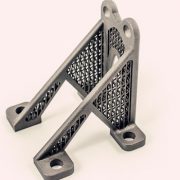
Application of titanium alloy in aviation industry


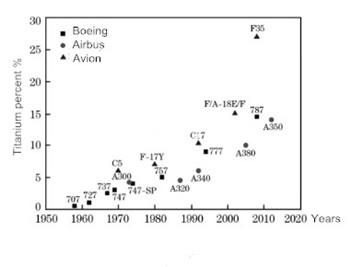
In the 1950s, the United States developed firstly the titanium alloy Ti-13V-11Cr-3Al in high-speed awacs, making this light-weight, high-strength, heat-treatable alloy was used for flight. In the 1960s, titanium alloy was widely used in non-military aviation engines and wide-body jets such as Boeing 747s. In the 1970s, the application of titanium alloy in aviation industry accounted for about 80% of the total titanium alloy market in the United States. In the other developed country such as Europe, Russia and Japan, titanium and titanium alloy applied on aircraft has increased significantly. Titanium is another new lightweight structural material applied in aerospace and aviation field after steel and aluminum alloy, and its application level has become an important mark to measure the advanced level of aircraft material selection.

Ti for aircraft body and frame

Titanium alloy is one of the important structural materials of aircraft body and frame. As a kind of weight reduction material, titanium alloy used in commercial and military aircraft has increased steadily in the past 50 years and the usage of titanium alloy on military aircraft has reached 30%~40%. The United States is the first country to successfully apply the design criteria of damaged safety and damage tolerance to advanced fighter aircraft. The F-22 fighter uses a large amount of damage tolerance titanium alloy and its large integral components to meet the design requirements of high weight loss and long life. The amount of titanium alloy in civil aircraft can also account for about 10%~15% of its total usage, among which the Boeing 787 airframe reaches 15%, which sets the highest record of titanium alloy used in the airframe. Modern aircraft fuselage, hydraulic pipes, landing gear, cockpit window frames, skin, fasteners, doors, wing structure, fan blades, compressor blades and other parts are mostly made of titanium alloy.

Ti for gas engine

titanium alloy is the main aviation material of Gas turbine engine, which accounts about 30% of the structure quality of modern turbine engine. Titanium alloy for engine design can further reduce the quality of the compressor blade and fan blade, prolong the life of the parts and repair cycle, so as to ensure the safety and stability of the aircraft. Compressor blades and the compressor set are the earliest engine parts made of titanium alloy, modern jet engines large front fan blades and spinning is also made of titanium alloy, these parts required materials under the working conditions of high temperature (300 ~ 600 ℃) has high specific strength, high temperature creep resistance, fatigue strength, rupture strength and stability.

With the improvement of thrust-weight ratio of aero engine, the high-pressure compressor outlet temperature increase leading to temperature of blade and disc rising, solid solution strengthening titanium alloy highest working temperature increased from 350 ℃ to 600 ℃. Alpha-Beta Titanium Alloys Ti-6AI – 4V is the main material under 400 ℃ for the fan blades and compressor 1, level 2 blades. At present, the fan blades and other parts of jet engines are mostly made of new titanium alloy alloy alloy alloy alloy sheaths. For example, The titanium alloy sheath used on the front and tip of the 747-8GENX engine fan blades has only been replaced three times in 10 years, proving that the titanium alloy fan blades withstood the rigorous test on the Boeing 777 aircraft.


The titanium and its alloy have found a large and diverse market in the aerospace industry such as commercial and military aircraft, space applications, missiles and various subsystems like engines and accessories. Lkalloy has a large stock range of materials ready for immediate supply to the aerospace industry. We even have built up a collection of other aerospace grades in stainless steel, nickel and copper-based alloys to meet the needs of more demanding safety critical components.


2205 duplex stainless steel welding analysis


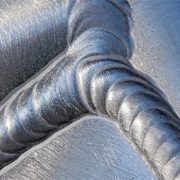
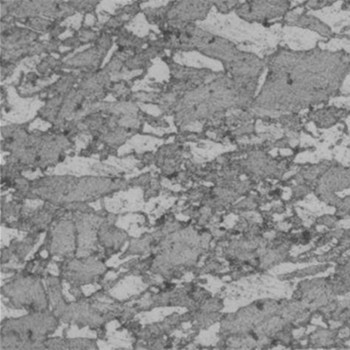
Composed by close to 1:1 Ferrite and Austenite phase, duplex stainless steel has excellent mechanical properties and resistance to chloride stress corrosion performance, was widely used in the oil and gas pipelines, chemical transportation tank, and the shipbuilding industry. Duplex stainless steel has excellent weldability and during the welding process, the microstructure of welding joint, especially the thermal zone, will cause a series of complicated phase transformation. Different welding methods and process also affect the microstructure and duplex in the welding joints, resulting in changes in mechanical properties and corrosion resistance. As a nickel saving stainless steel, duplex stainless steel 2205 can take the place of Austenitic stainless steel in many cases and reduce the engineering cost effectively. It is necessary to study the effect of different welding processes on the microstructure and properties for 2205 stainless steel joints.

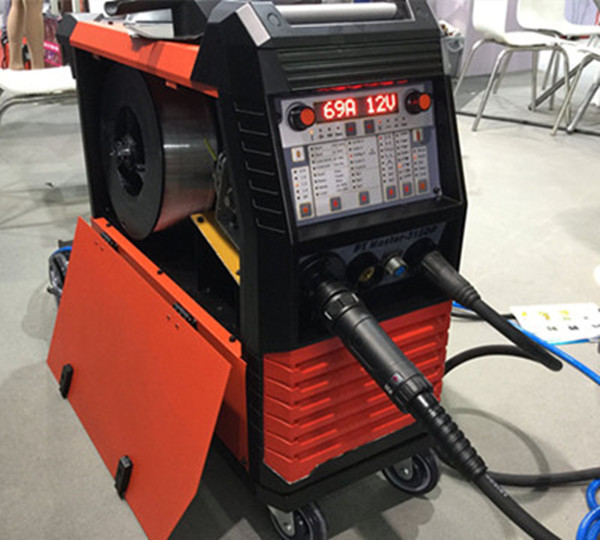
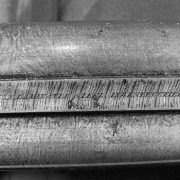
Recently, engineer studied the effect of heat input on Austenite shape and volume fraction in microstructure of simulated heat affected zone of duplex stainless steel and found that increasing heat input can effectively improve the volume fraction of Austenite in simulated heat affected zone. In addition, similar results can be obtained by changing the cooling rate of welded joints. Our researchers used metal inert-gas welding (MIG) to perform welding experiments on 160*320*12mm 2205 duplex stainless steel plate under different thermal input conditions to study the effect of thermal input of MIG welding on the microstructure and mechanical properties of welded joints. The results showed that:

  • The microstructure of the heat zone is greatly influenced by the heat cycle of welding. In the incomplete recrystallization zone far from the fusion line, the edge undulation of the belt Austenite increases gradually with the increase of heat input, and the width of zonal Austenite increases gradually. In the rough crystal region near the fusion line, the grain boundary Austenite forms a closed structure to enclose the Ferrite which produces few Austenite structure.
  • The Austenite morphology of weld metal in different areas is significantly different. The Austenite structure near the welding center is mostly equiaxial massive Austenite, while the Austenite structure near the fusion line is relatively thick and mainly weinstein-austenite. With the increase of heat input, the weinstein austenite in weld metal gradually decreased, while the number of massive austenite gradually increased.
  • With the increase of thermal input, the tensile strength and yield strength of the welded joint decreased slightly. Increasing the volume fraction of austenite in the heat affected zone and weld metal, decreasing of austenite and increasing of block austenite can slightly increase the fracture elongation of the welded joint.
  • The microhardness of welding joint increase and then reduce in turn from base metal to weld metal. The change of microhardness is related to the austenite volume fraction in each region of the welding joint. With the increase of thermal input, the austenite volume fraction in each region gradually increases while the microhardness decreases accordingly.

A brief introduction of two-sides titanium clad plate


Clad titanium plate refers to the composite plates made by cladding titanium plate and base steel plate through the explosion and rolling process. The base metal usually uses some cheaper material such as carbon steel or low alloy steel plate and the cladding layer usually using the stainless steel plate and other alloy steel with higher performance such as titanium for cladding material, sometimes one layer and sometimes double layers are available. The titanium cladding plate is characterized by its excellent bonding characteristics such as stable performance, wider and longer size and more economical performance. The cladding has a wide of industrial fields including chemical process, marine, power generation and so on.


The commonly used methods for titanium clad plate including: metal ingot rolling, explosion bonding, rolling compression, overlaying and other effective cladding technology. Recently a company from Nanjing, China develop and implement a kind of double layer cladding titanium plate methods, which manufactured by controlling the length of furnace burner flame to prevent the long fire exposure to the titanium plate and burning it, so as to prevent the two metals in combination with surface intermetallic compound is generated, is conducive to the shape of a control panel, in the process of rolling in the subsequent and reduce titanium layer thinning. This method has many advantages such as good shape, uniform size and excellent performance. The details of the process including:

(1) Choosing flawless clad plate and steel base plate.

For the two-sided cladding titanium plate, clad layers are titanium plate and the base layer is steel. The base plate and one of titanium sheet are combined with explosive cladding by vacuum technology, and then another titanium clad is combined by the secondary explosion to form double sides of the titanium-steel composite cladding. By the way, the base steel is ordinarily plain carbon and alloy steel.

(2) Cladding surface treatment.

The titanium cladding is treated on the surface to remove impurities on the upper and lower surfaces and burrs around them.

(3) Heating in the walking beam furnace and controlling the flame length of the burner.

Heat the cleared cladding sheet in the walking beam reheating furnace and preheating, heating and soaking in turn. Preheat temperature should be less than 550 ℃ and preheating time are more than 50 min; Heating temperature is 750 ~ 750 ℃, heating speed is 300 ℃ or less/h; Soaking zone temperature is 830 ~ 920 ℃, the soaking time is 60 ~ 150 min;screw-down rate

(4) Mill descaling and multiple rolling.

The soaking cladding was sent to the mill for descaling and rolled in 5~13 times. The first reduction rate of the rolling was controlled by > 20%, the next reduction rate was less than 10%, and the total reduction rate was 60%~90%. After the rolling, the cladding titanium plate was air-cooled.

(5) Air cooling and straightening.

The cladding plate is straightened after air cooling, and then straightened. Placed them in the straightening machine and determined the straightening order according to the thickness of the cladding sheet. And set the parameters of edge roller at the outlet of the straightening machine, so that the Ti-cladding plate to be straightened through the straightening machine uniformly; Straightening temperature should be greater than 600 ℃ or higher and straightening times at least 1 times


A brief introduction of heat treatment for titanium and titanium alloy


Titanium and titanium alloy has a perfect strength and weight ratio, good toughness and corrosion resistance. Titanium alloy is mainly used for manufacturing aircraft engine compressor parts and structural parts of missile and high-speed aircraft. In the mid-1960s, titanium and its alloys were used in the general industry to make electrodes for the electrolytic industry, condensers for power stations, heaters for oil refining and desalination and environmental pollution control devices, as well as hydrogen storage materials and shape memory alloys.

At present, the annual production capacity of titanium alloy in the world has reached more than 40,000 tons, with nearly 30 kinds of titanium alloy grades. In heat processing, impurities such as hydrogen, oxygen, nitrogen and carbon are easily absorbed. Due to the poor processability, it is difficult and complex to cut and reprocess for Ti and its alloy. Annealing is implemented to eliminate internal stress, improve plasticity and produce an optimum combination of ductility, machinability, and dimensional and structural stability. The commonly used heat treatment methods of titanium alloy including full annealing, solution and aging treatment. In addition, double annealing, isothermal annealing, dehydrogenation treatment, deformation heat treatment and other metal heat treatment processes are adopted.


1 Full annealing

The annealing of titanium and titanium alloys serves primarily to increase fracture toughness, ductility at room temperature, dimensional and thermal stability, and creep resistance. Generally, the β and α+β alloy is fully annealed and used as the final heat treatment.

  1. The full annealing of α(alpha) titanium alloy is mainly recrystallization. The annealing temperature is usually selected in the alpha phase zone and in the (α+β)/β phase transus temperature between 120 ~ 200 ℃. If the temperature is too low, it will cause the incomplete recrystallization or oxidation and coarse grains if it’s too high.
  2. The full annealing temperature of the nearly dilated titanium alloy and the bestial titanium alloy was selected from the point of view of the first phase, and below the point of view of the second phase change of the first phase. In the annealing process, there are not only the tissue recrystallization, but also the changes in composition, quantity and shape of the α and β phases.
  3. β (Beta) Annealing. Beta annealing is done at temperatures above the β transus of the alloy being annealed. To prevent excessive grain growth, the temperature for β annealing should be only slightly higher than the β transus. Annealing times are dependent on section thickness and should be sufficient for complete transformation. Due to the fact that the maltitanium alloy can be strengthened by heat treatment and its strength is improved after annealing, it is actually a kind of solid solution treatment.


2 Stress Relief Annealing

In order to eliminate the internal stress generated during pressure processing, mechanical processing and welding, to prevent chemical erosion and reduce deformation in some corrosive environments. Titanium alloy should be stress relief annealing. The stress annealing temperature is less than the recrystallization temperature, generally for 450 ~ 650 ℃. The Solution time is respectively 0.25~4h for industrial pure titanium, 0.5 ~ 2h for mechanical parts, and 2 ~ 12h for welding parts, which are then cooled in the air.


3 Solution Treatment and Aging

In order to improve its strength, α and stable β phase titanium alloy cannot be subjected to intensive heat treatment. The solid solution and aging treatment are to rapidly cool down from the high-temperature area to produce a higher ratio of β phase. This partitioning of phases is maintained by quenching; on subsequent aging, decomposition of the unstable β phase occurs, providing high strength so as to strengthen the alloy.


4 Double annealing

Double annealing improves the plasticity and toughness of the two-phase alloy and stabilizes the microstructure. The first anneal temperature is higher than or close to the recrystallization temperature, so that the recrystallization process is fully carried out and then air cooled. Because the tissue is not stable enough after annealing, a second anneal is needed, which is then heated to a lower temperature before and kept for a long time, so that the optical phase is fully decomposed and aggregated to guarantee the stability of the tissue. double annealing can also be used for Gr5 titanium alloy.


5 Isothermal Annealing

It’s appropriate for α+β Ti alloy. Due to its high content of stable β phase, it is difficult to fully decompose when air cooled to obtain satisfactory softening effect with full annealing. Therefore, isothermal annealing is often adopted. Heated the titanium alloy to (alpha + beta)/beta phase transition point below 30 ~ 80 ℃ and then furnace cooling, or remove the artifact to lower than the transformation temperature of 300 ~ 400 ℃ isothermal a period of time, and then air cooling. Isothermal annealing can improve the titanium plate’s plasticity and thermal stability.


6 Dehydrogenation process

Dehydrogenation process aims to eliminate hydrogen embrittlement. Dehydrogenation is carried out in a vacuum furnace, where heat causes hydrogen to escape from the Ti alloy, also known as vacuum annealing. The annealing temperature is 540 ~ 760 ℃, holding time 2 ~ 4 h after air cooling, vacuum degree of vacuum furnace values are not greater than 1.33 Pa. Time and temperature combinations for solution treating are given in Table below.


Grades Heat treatment Temperature /℃ Solution time Cooling code
CP titanium Full Annealing 630-815(sheet/plate/pipe) 0.25-2h air cooling or slowly air cooling
630-815(bar/wire/forging) 1-2h
Ti-5AL-2.5Sn/gr6 Full Annealing 700-850(plate) 10min-2h air cooling
700-850(bar/forging) 1-4h air cooling/water cooling
Ti-0.2Pd/gr7 Full Annealing 650-760 6min-2h air cooling/furnace cooling
Ti-0.3Mo-0.8Ni/gr12 Full Annealing 650-760 0.25-4h Air cooling/ stepped cooling
Ti-6Al-4V Full annealing 700-850(plate) 0.5-2h Air cooling
700-850(bar/forging) 1-2h Air cooling/water cooling
Ti-6.5AL-3.5Mo-1.5Zr-0.3Si/bt9 double annealing 950 1-2h Air cooling to 530℃
530 6h Air cooling


How many types of annealing heat treatment did you know?


Annealing is a heat treatment process by which the steel and alloys are heated to a suitable temperature for a certain period of time and then allowing it slowly cooled (furnace cooling). The purpose of annealing is to transform steel from Austenite to Pearlite, reduce hardness and increase ductility, facilitate machining and cold deformation, and at the same time uniform the chemical composition and structure of steel to eliminate internal stress and work hardening, prevent deformation and cracking. Some types of Aluminum, Copper, Titanium and other materials may also respond to an annealing process. Common annealing methods according to the temperature and chemical composition in the process, the annealing can be divided into:

1.Full Annealing.

Heat the steel to 20 ~ 30 ℃ and keep a period of time after slow cooling to get close to balance the organization’s heat treatment process (completely austenitizing). Full annealing is mainly used for Hot-Worked sheets, forgings, and castings made from medium and high carbon steels as well as its welding parts. The hardness of low carbon steel after annealing is not good for machining.

Full annealing is aimed at refining grain, homogeneous structure, eliminating internal stress, reducing hardness and improving the machinability of steel. After full annealing, the structure of the hypoeutectoid steel is F+P. In the actual production, in order to improve productivity, annealing cooling to about 500℃ or empty out cold.

2. Partial Annealing.

Heat the steel to the state of hypoeutectoid or hypereutectoid steel and then cool slowly after heat preservation to obtain the heat treatment process close to the balanced structure. It is mainly used to obtain spherical pearlite structure to eliminate internal stress, reduce hardness and improve machining performance. Spheroidization annealing is a kind of partial annealing.

3. Isothermal Annealing.

This process is also referred grecrystallization annealing which the steel is heated to a temperature higher than critical temperature, stayed for a long time and rapidly cooled to a room temperature, making the transformation from Austenite to Pearlite. It takes a long time to finish full annealing, especially for the super-cooled Austenitic stainless steels, while the isothermal annealing can greatly shorten the annealing time.

This process is for high carbon steel (C > 0.6%), tool steel, alloy steel (the amount of alloy element > 10%). Isothermal annealing is also helpful to obtain uniform tissue and properties but not suitable for large sections.

4. Spheroidizing Annealing.

A heat treatment process for spheroidizing carbide to obtain granular pearlite. Heated the steel to Ac1 more than 20- 30 ℃ and keep the temperature of 2- 4h after cooling. Spheroidization annealing is mainly used to reduce the hardness, uniform structure and improve the machinability to prepare for quenching. This is a process for high carbon and alloy steel in order to improve their machinability. There are many methods for spheroidizing annealing process, this can be done by three methods:

  1. A) Once spheroidizing annealing: heat the steel to greater than critical temperature above 120 ~ 30 ℃and stayed for a time, then allow it cooling down slowly in the cooling furnace. The original tissue before annealing should be a fine sheet pearlite and no carburized mesh is allowed.
  2. B) Isothermal spheroidizing annealing: heat the steel after heat preservation, along with the furnace cooling below critical temperature10 ~ 30 ℃. After isothermal along with the furnace cooled to about 500 ℃ or slow released air cooling. It has several advantages such as short cycle, uniform spheroidization and easy quality control.
  3. C) reciprocating spheroidizing annealing

5. Diffusion Annealing(Homogenizing annealing).

A heat treatment process in which ingots, castings, or blanks are heated to a temperature slightly below critical temperature for a long time and then cooled slowly to eliminate chemical inhomogeneity. Thus to eliminate dendritic segregation and regional segregation during solidification of the ingot, and to homogenize the composition and structure. The temperature of diffusion annealing is very high, usually above the critical temperature of 100 ~ 200 ℃ for 10 ~ 15 hours, which depending on the segregation and the steel grade. Diffusion annealing for some high quality alloy steel and alloy castings and ingot with serious segregation.

6. Stress Relief Annealing.

In order to eliminate the residual stress, the steel heated to a temperature below the critical temperature (generally 500 ~ 650 ℃) after the heat preservation, then cooled in the furnace. De-stressed annealing does not change the metal structure.

7. Recrystallization annealing.

Recrystallization annealing, also known as intermediate annealing, is a heat treatment process that heats the cold-deformed metal above the recrystallization temperature for a certain period of time, so that the deformed grain can be converted into the uniform equiaxed grain to eliminate the processing hardening and residual stress. Recrystallization must occur at first with a certain amount of cold plastic deformation and then at a certain temperature. The lowest temperature at which recrystallization occurs is called the lowest recrystallization temperature. Heating of recrystallization annealing temperature should be higher than the lowest recrystallization temperature of 100 ~ 200 ℃ (the minimum steel recrystallization temperature of about 450 ℃), slow cooling after appropriate heat preservation.

What’s CP titanium?

Titanium is classified into two categories according to the content of titanium and other impurity composition such as aluminum (Al) and vanadium (V): Commercially pure titanium (CP Titanium) and titanium alloys. CP titanium provides corrosion resistance, strength and fatigue characteristics that compare favorably to those of nickel and steel alloys.

CP titanium is widely used in the medical engineering and chemical process industries and the manufacture of sheet plate, forging and pipes which work in the temperature between 253 and 350 ℃ or requires ratio of strength to weight. We can say that CP titanium is a compact metal with a content of more than 98% titanium and a small amount of impurity elements such as Oxygen, Nitrogen, Hydrogen, Carbon, Silicon and iron. Oxygen, Nitrogen and Carbon all increase titanium’s tensile strength at room temperature but also reduce its plasticity, so there are strict limits on their content for pure titanium, especially the existence of oxygen. The solubility of hydrogen in titanium is very small and its reaction in titanium is reversible. The main effect of hydrogen on the properties of titanium is “hydrogen embrittlement”. When the hydrogen content reaches a certain amount, it will greatly increase the sensitivity of titanium to the notch, thus sharply reducing the impact toughness. It is generally stipulated that the hydrogen content in titanium shall not exceed 0.015%.

The strongest grade of unalloyed grades 1, 2, 3 and 4, this is a commercially pure, moderately formability alloy with good ductility. Other countries have different specification for pure titanium, such as Japan JIS Class l, 2, 3; UK IMI 115, 125, 130, 155, 160; Germany DIN 3.7025, 3.7035, 3.7055, 3.7065 and China TA1, TA2, TA3, etc. The grades 1, 2, 3 and 4 is the mostly used material specification form American Society for Testing Material.

ASTM CP Ti Ti Fe C O H N
Grade 1 Balance 0.20 0.08 0.18 0.015 0.03
Grade 2 Balance 0.30 0.08 0.25 0.015 0.03
Grade 3 Balance 0.30 0.08 0.35 0.015 0.05
Grade 4 Balance 0.50 0.08 0.40 0.015 0.05

Grade 1 titanium is the softest and most ductile of these grades in the commercially pure family. It possesses the greatest formability, excellent corrosion resistance and high impact toughness. Because of all these qualities, Grade 1 is the material of choice for any application where ease of formability is required and is commonly available as titanium plate and tubing.
Grade 2 is the most widely used titanium alloy in all product forms for industrial service, offering an excellent balance of moderate strength and reasonable ductility. Especially it has highly corrosion resistant in highly oxidizing and mildly reducing environments, including chlorides. It was widely used in almost every application that needs Ti such as chemical processing, dimensional stable anodes, medical industry, marine industry, automotive parts and airframe structure.
Grade 3 is used in applications requiring moderate strength and major corrosion resistance and it is least used of the commercially pure titanium family, but that does not make it any less valuable. Grade 3 is stronger than Grades 1 and 2, similar in ductility and only slightly less formable, but it possesses higher mechanicals than its predecessors.
Grade 4 is known as the strongest of the four grades of CP titanium family. It is also known for its excellent corrosion resistance, good formability and weldability. Grade 4 is normally used in the industrial applications and found a niche as a medical grade titanium recently.

LKALLOY offers several different commercially pure ASTM B348 and ASTM B265 Titanium Grades 1, 2, 3 and 4. More details about new information and price, call for us today or email [email protected]

What’s the beryllium copper?

Beryllium is a steel grey, strong, light-weight metal that has one of the highest melting points of the light metals. It has excellent elasticity modulus, thermal conductivity, is nonmagnetic and resists to concentrated nitric acid. Beryllium is primarily used as an alloying agent in the production of beryllium copper and more than 70 percent of the world’s total beryllium is used to produce beryllium copper.

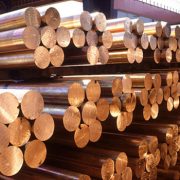
Beryllium copper(BeCu), also known as Beryllium Bronze or Spring Copper, A alloy by adding 0.2~2.75% Beryllium and sometimes other elements in the cooper. Beryllium copper is a precipitated and aged hardened alloy. Its hardness can reach HRC38~43 after solution aging treatment, and electric conductivity is also greatly improved. The beryllium copper has a wide range of applications for where require excellent increased strength, durability, and electrical conductivity such as the molds manufacturing, explosion-proof safety tools, electronic devices and other automotive applications.

The international manufacturers of high quality beryllium copper are Ulba Metallurgical, Brushwellman(now Materion Brush) of the United States and Japan company Hinko (NGK). The general product code in the market is mainly according to ASTM standards, and the alloy material is marked with the letter C. C17000, C17200 and C17300 are the most commonly used beryllium copper materials.


The widely used relevant American standards about beryllium copper:

ASTM B 194: Specification for copper-beryllium alloy plate, sheet, strip and roll bar;

ASTM B196: Specification for copper-beryllium alloy rod and bar;

ASTM B197: Specification for copper-beryllium alloy wire;

ASTM B 643: Specification for copper-beryllium alloy seamless tube;

ASTM B441: Specification for copper-cobalt-beryllium, copper-nickel-beryllium, and copper-nickel-lead-beryllium rod and bar (UNS no c17500, c17510, and c17465);

ASTM B534: Specification for copper-cobalt-beryllium alloy and copper-nickel-beryllium alloy plate, sheet, strip, and rolled bar.


How was beryllium copper alloy was classified?

According to its processing methods, Beryllium copper can be divided into deformation beryllium copper and casting beryllium copper. According to beryllium content and its characteristics, it can be divided into high strength beryllium copper(1.6% ~ 2.0% Beryllium) and high conductivity beryllium copper(0.2% ~ 0.6%Beryllium ). C17000, C17200 and C17300 are high strength family with moderate conductivity, while the C17500 and C17510 offer high conductivity with moderate strength. The corresponding casting beryllium copper includes high-conductivity cast beryllium copper (C82000, C82200) and high cast beryllium copper with Abrasion resistance (C82400, C82500, C82600, C82800).


What’s beryllium copper sheet and tubing used for?

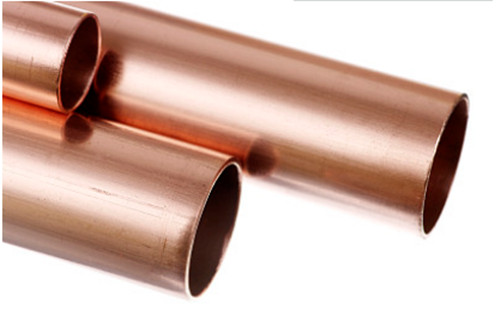
Beryllium copper is widely used in the field of aerospace&aviation, electronics, communication, machinery, petroleum, chemical industry, automobile and household appliances. Beryllium copper sheets and tubing are used to make key parts such as film disc, diaphragm, corrugated tube, spring washer, micromotor brush and commutator, electrical connector, switch, contact, watch parts, audio components, advanced bearing, gear, automobile electrical equipment, plastic mold, welding electrode, submarine cable, pressure shell, sparkless tool, etc.


Beryllium copper alloy has a similar strength limit, elastic limit, yield limit and fatigue limit as special steel. It has high thermal conductivity, high conductivity, high hardness, high wear resistance, high temperature stability, high creep resistance and corrosion resistance. It also has good casting properties, non – magnetic and no spark in impact. It can be said that BeCu alloy is a perfect alloy with a combination of good physical, chemical and mechanical properties. More details about Beryllium copper alloy, call for us today or email [email protected] to learn more.


Practical application of titanium alloy in 3D printing technology

Titanium, one of the widest-known alloys in Metal 3D Printing, combines excellent mechanical properties with very low specific weight. Pure titanium is available in grades one through four and all grades exhibit extreme corrosion resistance, ductility and weldability. Ti6Al4V is a titanium alloy that is 6 percent aluminum and 4 percent vanadium and it maintains its high tensile strength even at extreme temperatures. In 3D printing, they can be found a wide range of options in practical application.


1 Medical application

In industrial process, titanium’s biocompatibility makes the metal optional for medical applications, particularly when direct metal contact with tissue or bone is a necessity. Among the metal materials used for human hard tissue repair, Ti’s elastic modulus (about 80~110 GP) is the closest to human hard tissue, which can alleviate the mechanical inadaptability between metal implants and bone tissue. Therefore, titanium alloy has a wide application prospect in the medical field.

In the mid-20th century, the American and the United Kingdom applied pure Ti in organisms in the first time. Pure Ti has good corrosion resistance in physiological environment, mainly used for oral repair and replacement of less bearing parts, but its poor wear resistance has limited its application in bearing parts.

In 3D printing, the mechanical properties of titanium alloys Ti6Al4V(Gr5) and Ti6Al4V (Gr23) make them popular choices for clinical medicine. Compared with pure Ti, Ti6 Al4V alloy has high strength and good processability, was originally designed for aerospace applications, then is widely used in surgical repair materials such as the skull reparation, bone plate, etc. For a long time, the domestic and foreign research team focus mainly on Ti6Al4V, but the element Al and V may be harmful to human body, the new beta titanium alloy without Al and V such as TiZrNbSn, Ti24Nb4Zr7. 6 Sn etc were found.

Nowadays, 3D printing has been applied in orthopedic surgery and bone replacement. According to the data of patients, the prosthesis and auxiliary guide were printed out to help to find the incision position, perforation position, and drilling depth to simulate the surgery. The prosthesis manufactured by 3D printing technology can regenerate human tissue cells in the interspace, and the customized prosthesis is the same as the original shape of the patient’s body, and finally achieves the effect of close to the real bone after the surgery. In July 2015, thoracic surgery of TangDu hospital of China successfully performed a 3D printed titanium alloy sternum implant as a patient with the sternal tumor, becoming the world’s first 3D printed titanium alloy sternum implant. Dentistry is featured by personalized customization, rapid and lightweight miniaturization, which is especially suitable for adopting metal powder, especially titanium alloy powder 3D printing technology. Its products include dental crowns, dental Bridges, lateral orthodontic brackets, denture brackets, and dental screws.


2 Molds and tooling

Titanium alloys are used to produce a wide range of components and parts such as including blades, fasteners, rings, discs, hubs and vessels. Compared with the traditional forging and casting methods, the computer-controlled 3D printing converts CAD optimally into machine code or to rule out human errors, strictly controls the size of tooling part, especially for complex parts and ultra-complex curved parts. It greatly reduces the production time of the model and mold, improves the precision and quality of the model, and reduces the production time and cost.


3 Aerospace & Aeronautics

Producing aircraft is becoming more efficient and cost-effective than ever because it takes quality engineering to get an aircraft up in the sky. From lightweight components to certified series production, we know that aircraft components require an unconventional touch. The high cost, complex process and long delivery time of titanium alloy products manufactured by traditional forging and casting techniques limit their application, especially in the aerospace industry where customization is required.”Lightweight” and “high strength” have been the main objectives of aerospace equipment manufacturing and development, while the metal parts produced by 3D printing fully meet their requirements for equipment.

The titanium alloy used for gearboxes and connecting rod are Ti6Al4V and Ti6Al4VEL. 3D printing technology integrates conceptual design, technical verification and production and manufacturing, which can quickly realize small-scale product innovation and shorten development time. The total amount of material was reduced by 63%. The significant weight reduction leads to a smaller carbon print and less fuel usage for airplanes. The thermal stress was reduced due to less bulk material and larger support areas and complex shaped parts can be manufactured.


Brief introduction of widely used metal materials for 3D printing

3D metal printing, also commonly known as metal fusion, has conquered new markets in aeronautics, medical, construction and automotive sectors in last few years with its incomparable advantages and convenience. At present, 3D printing metal technology is fast and relatively cheap, can also be used to create large structures. The printing technology mainly includes selective laser sintering (SLS), electron beam fusion (EBM), selective laser fusion (SLM) and laser engineered net shaping (LENS). SLM use a high-energy laser source which can melt a variety of metal powder, is the most commonly used method. Metal powder used for 3D printers in domestic and foreign generally are: Tool steel, Martensitic steel, Stainless steel, Pure titanium and titanium alloy, Aluminum alloy, Nickel base alloy, Copper base alloy, Cobalt-chromium alloy and so on.


STAINLESS STEEL

Stainless steel is the first material used in 3D metal printing due to its good chemical resistance, high-temperature resistance and good mechanical properties. At present, there are mainly three kinds of stainless steel applied in metal 3D printing: Austenite stainless steel 316L, Martensite stainless steel 15-5PH and Martensite stainless steel 17-4PH.

316L Austenitic stainless steel, with high strength and corrosion resistance, can be reduced to low temperature in a wide range of temperatures. It is applied in various engineering applications such as aerospace and petrochemical, as well as food processing and medical treatment.

15-5PH Martensitic stainless steel, also known as Martensitic aging (precipitated hardening) stainless steel, has high strength, good toughness and corrosion resistance, is a further hardening of the ferrite-free steel. At present, it is widely used in aerospace, petrochemical, chemical, food processing, paper and metal processing industries.

17-4 PH Martensitic stainless steel, which still has high strength and high toughness under 315 ℃, and strong resistance to corrosion and can bring excellent ductility as the laser machining state.


TITANIUM ALLOY

Titanium alloys have been widely used in aerospace, chemical industry, nuclear industry, sports equipment and medical devices due to their high temperature resistance, high corrosion resistance, high strength, low density and biocompatibility. Titanium alloy parts have been widely used in high-tech fields, such as F14, F15, F117, B2 and F22 military aircraft. The proportion of titanium used in a Boeing 747 aircraft is respectively 24%, 27%, 25%, 26% and 42%. However, the traditional forging and casting methods to produce large titanium alloy parts have many disadvantages, such as high cost, complex process, low material utilization rate and difficult follow-up processing, which hinder its wider application. Metal 3D printing technology can solve these problems fundamentally, so it has become a new technology for directly manufacturing titanium alloy parts in recent years.

TiAl6V4 (Gr5) is the first alloy used in SLM3D printing production. However, the poor plastic shear deformation resistance and wear resistance of titanium limit its use under high temperature, corrosion and wear resistance conditions. Therefore, Re and Ni are introduced into titanium alloys, and the 3D printed Re-based composite sprinkler has been successfully applied to the combustion chamber of aero-engine, and the operating temperature can reach 2200%.


COBALT

H13 hot work tool steel is one of them. Tool steels are widely used in industrial parts because of their excellent hardness, wear resistance, deformation resistance and the ability to maintain cutting edges at high temperatures. Martensitic steels, taking Martensite 300 as an example, also known as maraging steels, are noted for their high strength, toughness and dimensional stability during aging. Due to its high hardness and wear resistance, Martensite 300 is suitable for many die applications such as injection molds, light metal alloy casting, stamping and extrusion, and is also widely used in aerospace, high strength fuselage parts and racing car parts.


ALUMINUM ALLOY

Aluminum alloys have excellent physical, chemical and mechanical properties and have been widely used in many fields. However, the properties of aluminum alloys themselves (such as easy oxidation, high reflection and thermal conductivity) increase the difficulty of selective laser fusion manufacturing. There are some problems such as oxidation, residual stress, void defects and densification in SLM process when printing aluminum alloys. These problems can be improved by strictly protecting atmosphere, increasing laser power and reducing sweep speed. At present, SLM prints aluminum alloy materials mainly are the Al-Si-Mg series alloy such as AlSi12 and AlSi10Mg. Aluminum-silicon 12 is a lightweight additive manufacturing metal powder with good thermal performance. It can be applied to thin wall parts, such as heat exchangers or other auto parts. It can also be applied to the prototype and production parts of aerospace and aviation industry.The addition of silicon and magnesium gives the aluminum alloy more strength and hardness, making it suitable for thin wall and complex geometric parts, especially in the case of good thermal performance and low weight.


MAGNESIUM ALLOY

As the lightest structural alloy, magnesium alloy has the possibility of replacing steel and aluminum alloy in many application fields due to its special high strength and damping properties. For example, lightweight applications of magnesium alloys in automotive and aircraft components can reduce fuel use and exhaust emissions. Mg alloy has excellent in-situ degradation and biocompatibility, with low Young’s modulus and close to the human bone strength. It has more application prospect in surgical implantation than traditional alloy.


HIGH-TEMPERATURE ALLOY

High temperature alloy refers to the super steel alloy which with iron, nickel and cobalt as the base and can still long-term work in the high temperature of 600 ℃ or above and stress environment. It has high temperature strength, good resistance to corrosion resistance and oxidation resistance and good plasticity and toughness. At present, the alloys can be roughly divided into three categories: Fe based alloy, nickel based alloy and cobalt alloy.

Superalloy is mainly used in high-performance engines. In modern advanced aero engines, the use of superalloy material accounts for 40% ~ 60% of the total engine mass. The development of modern high performance aero engines requires more and more high temperature and performance of superalloy. The traditional metallurgical process of ingots is slow in cooling, some elements and second phase segregation are serious in ingots. 3D printing is a new method to solve the technical bottleneck in nickel alloy forming.

As a result, Inconel 625 is frequently used in metal parts used in marine applications and  oil and gas production. Inconel 718 is an age-hardened version of 625. 718 is a nickel-based alloy, which has good corrosion resistance and heat resistance, stretching, fatigue and creep properties, and is suitable for various high-end applications, such as aircraft turbine engines and land-based turbines. Inconel 718 alloy is the earliest used nickel base superalloy and is also the most used alloy of the aero engine at present.

Cobalt-chromium alloy has high strength, strong corrosion resistance, good biocompatibility and non-magnetic properties. It is mainly used in surgical implants, including alloy artificial joints, knee joints and hip joints, and can also be used in engine parts, fashion and jewelry industries.


Since the emergence of 3D printing technology in the 1990s, from the initial polymer materials to metal powder, many new technologies, new equipment and new materials have been developed and applied. There are a wide range of metal materials suitable for industrial 3D printing, but only several specified powder materials can meet the requirements of industrial production. Although the 3D printing technology of metal powder has achieved some achievements at present, the material is still the biggest factor and there are more higher requirements on 3D printing materials. Therefore, the development of 3D printing technology of metal powder still has a long way to go.


What’s 2205 steel?Duplex stainless steel S31803 or S32205?

Duplex stainless steel (UNS S31803, S32205, S32750, S32900) combines the advantages of Ferrite and Austenite steel. Its duplex structure is conducive to obtaining high strength and stress resistance. In addition, higher content of chromium, nitrogen and molybdenum increases corrosion performance and duplex steel also has good welding performance. Due to its excellent properties, duplex stainless steel is widely used in chemical industry, paper manufacturing, desalination equipment, firewalls, Bridges, pressure vessels, heat exchangers, turbine blades and transmission shafts of offshore systems.

Sometimes, UNS S31803 and UNS S32205 are referred to as duplex 2205. Generally, UNS2205 contains ASTM S31803 and S32205 duplex stainless steels. In other words, S31803 and S32205 are both called  2205 stainless steel, and S32205 is the upgraded series of S31803 by the adding of the lower limit content of Cr, Mo and N elements, which makes the little difference in mechanical properties. Their tiny differences in chemical elements and physical properties are showed below:

UNS2205 C max P S Si max Mn max N Mo Ni Cr
S31803


0.03


0.03 0.02 1.00


2.00 0.08-0.2 2.5-3.5 4.5-6.5 21.0-23.0
S32205


0.03

max

0.03 0.02 1.00

max

2.00 max 0.14-0.2 3.0-3.5 4.5-6.5 22.0-23.0


UNS2205 Tensile strength

min, Mpa

Yield strength

0.2% offset, min, Mpa

Elongation, A5%
S31803 620 450 25
S32205 655 450 25


According to the ASTM A182 Standard, Specification for forged or stainless steel pipe Flanges, Forged Fittings, and Valves and Parts for High-Temperature Service, UNS S31803 and UNS S32205 cannot be confused and they specified in different number, S31803 is marked by F51 and S32205 is F60.

When speaking of 2205 steel, it generally refers to S31803 or F51, while UNS S32205 or F60 conforms to ASTM 2205 adopts its higher corrosion resistance range, that is, UNS S32205 requires higher Chromium and Nitrogen content, thus guaranteeing better corrosion resistance. Generally, S32205 steel plate and S31803 are also called double standard steel plate, or 2205 steel plate for short. Our factory produce 2205 tubing and 2205 plates to make its chemical composition conform to two specifications of UNS 31803 and S30025. Our steel plate in stock can meet two kinds of standards at the same time.